
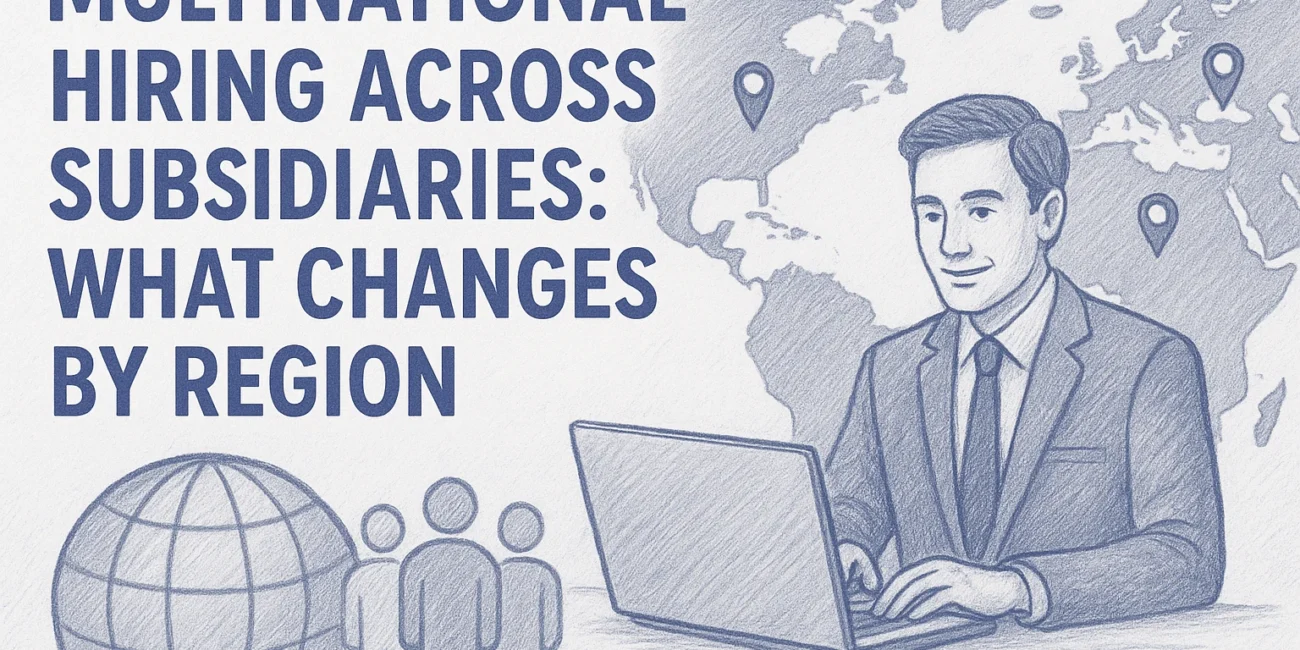
Quick Summary: Multinational hiring works best with one global standard for approvals, scorecards, and data, but local teams must adapt contracts, payroll, benefits, and sourcing per region. Regional differences matter: U.S. states and Canadian provinces vary on leave and pay rules, Europe and Asia have stronger worker protections, and Latin America requires detailed payroll and statutory benefit mapping. Build a reusable playbook with a global template plus country sheets, and assign local legal and payroll owners to review compliance quarterly. The key is standardizing decisions and records, not every local step, so hiring stays consistent without feeling managed from headquarters.
One U.S. requisition can trigger very different hiring work in Germany, Brazil, and India. Each subsidiary may need its own contract steps, payroll dates, benefits, and exit review. That makes multi country hiring hard to run as one process. This guide shows how to build a shared model for multi country hiring while adapting local execution. It draws on global recruitment experience across regional markets and subsidiary structures.
What Headquarters Should Standardize Across Subsidiaries
Create One Global Hiring Control Layer
Set one approval path, job-level framework, interview scorecard, and hiring data set for multi country hiring. Track time to hire, source quality, offers, and declines by subsidiary. Keep selection tools job-related and review results for unfair impact, as EEOC guidance advises.

Standardize decisions and records, not every local step.
Localize the Candidate-Facing Experience
Let local teams adapt job ads, interview timing, language, benefits details, and notice periods. Confirm local rules before background checks or pay talks. This keeps multi country hiring consistent without making candidates feel managed from U.S. headquarters.
Also Read: Global Hiring Strategies That Reduce Risk in 2026
What Changes by Region When You Hire Through Subsidiaries
A subsidiary gives you a local employer, not one universal hiring rule. Keep one global approval process, then set regional playbooks for contracts, pay, benefits, and worker relations.
North America: State and Province Variation Inside a Familiar Model
U.S. state rules can change leave, pay notices, and final-pay steps. Canadian provinces set many employment standards. Build location checks into each offer, not just country checks.
Stronger Local Employment Protections and Employee Representation
In parts of Europe and Asia, dismissal rules, notice, consultation, and worker groups can shape hiring plans. In Brazil, unions may bargain for an entire occupational category and area, according to the U.S. State Department.

Tip: Ask local counsel to review job level, contract terms, and collective agreement coverage before posting.
Latin America: Payroll, Benefits, and Local Process Detail
Treat payroll as a hiring workstream. Map statutory benefits, social contributions, pay cycles, and required filings before setting salary ranges. Colombia’s new labor procedure code takes effect for new cases from April 2, 2026, notes the Library of Congress.
Market-Specific Hiring Norms and Workforce Planning
Adapt sourcing and start dates to each market. Check notice periods, local holidays, language needs, and candidate expectations. Use this checklist:
- Confirm local contract and payroll inputs.
- Set a market-based compensation range.
- Plan onboarding around local timing and documents.
Also Read: 7 Global Hiring Strategies for Multinational Teams
Choose the Right Multinational Hiring Solution for Your Subsidiary Network
Match the Solution to Subsidiary Maturity
Use local recruiting support for new or lean subsidiaries. Move to a shared hiring model once teams have stable leaders, payroll, and HR ownership. Keep the legal employer clear. Even with outsourced payroll, the employer may retain tax duties, the IRS warns.
Choose one operating standard, then allow local teams to adapt offers and onboarding.
Score Providers on Regional Execution, Not Country Count
Ask each provider to show real delivery in your priority markets.
| Score area | What to test |
|---|---|
| Local reach | Recruiter knowledge of pay, notice, and culture |
| Hiring speed | Time from brief to qualified shortlist |
| Control | Clear owner for compliance and candidate experience |
- Request market-specific examples.
- Check local references.
- Compare reporting across subsidiaries.
Also Read: How U.S. Employers Can Build an International Hiring Strategy
Build a Regional Hiring Playbook You Can Reuse
Create one global template, then add a country sheet for each hiring market.
| Playbook item | Set globally | Adapt locally |
|---|---|---|
| Role brief | Skills, pay band, approval owner | Language and market pay |
| Hiring flow | Interview stages and scorecard | Notice periods and checks |
| Offer process | Required approvals | Contract terms, payroll, benefits |
- Assign a local legal and payroll owner.
- Record recruiter, agency, and candidate fee rules.
- Review the sheet every quarter.
The ILO says cross-border recruitment must follow relevant laws in origin and destination countries, and workers should not bear recruitment fees. Read the guidance.
Build one hiring model that still works locally. The Recruiting Guy connects you with regional recruiters to source compliant, culture-fit talent across subsidiaries.
Frequently Asked Questions
Q1: Best hiring solutions for multinational organizations?
Use one global hiring policy, then adapt contracts, payroll, benefits, and sourcing by country. Local recruiting partners help subsidiaries move faster without ignoring legal or cultural needs.
Q2: Can subsidiaries share one hiring process?
Yes. Keep shared approvals and scorecards, but let local teams adjust interview style, notice periods, and required documents.
Q3: Who owns compliance across regions?
Central HR sets standards. Local legal, payroll, and HR experts must review country-specific hiring steps.
Conclusion
Use one hiring model, then adapt contracts, payroll, benefits, and communication locally. OECD data shows dismissal rules vary widely, so local review protects both subsidiaries and new hires.

Other Articles

Global Recruitment Network: 9 Features Buyers Should Compare
Global Staffing vs Local Recruiting: Which Fits Expansion?


No Comment! Be the first one.