
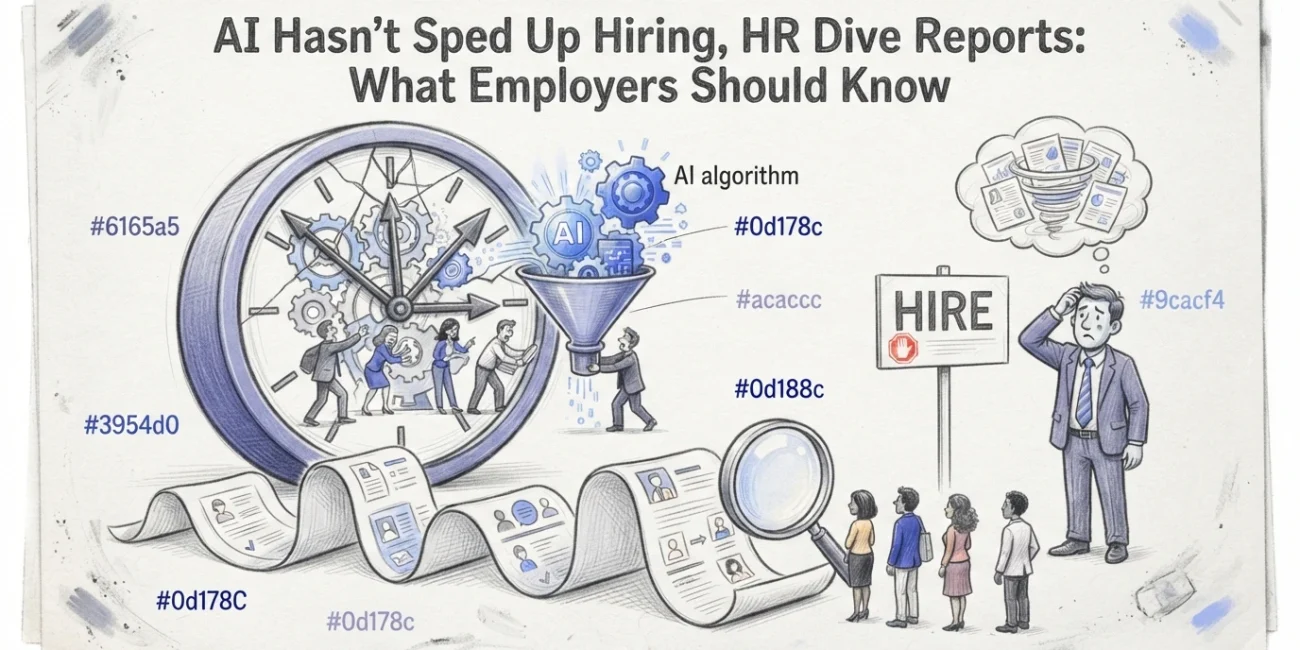
Quick Summary: A ManpowerGroup survey of nearly 40,000 employers found only about a third saw faster time-to-hire since adopting AI, while 25% actually got slower, because bottlenecks sit in human steps like approvals and scheduling, not in resume screening. Tools accelerate admin on top of the same structural delays, so most AI recruiting investments have produced flat results. The fix is auditing the funnel, trimming approval chains, and treating AI as support rather than a cure, a gap that global recruiting partners like The Recruiting Guy can close by handling the human stages software cannot.
AI hiring speed was the pitch. The results haven’t followed. A ManpowerGroup survey of nearly 40,000 employers, covered by HR Dive on September 15, 2026, found only about a third say AI improved their time-to-hire since 2025. Roughly a quarter report slower hiring. Here’s what the data means for AI hiring speed, why broken processes block gains, and what to fix before buying more tools.
What the ManpowerGroup Survey Actually Shows About AI and Time-to-Hire
The Headline Numbers
ManpowerGroup surveyed nearly 40,000 employers across 42 countries, and the results undercut the hype around AI hiring speed. As HR Dive reported, only a third of respondents said their time-to-hire improved compared to 2025. Meanwhile, 42% saw no change at all, and 25% said hiring actually got slower. In short, most employers gained nothing, and a quarter lost ground.
How That Compares to Vendor Promises
Recruiting software vendors promise a big drop in time-to-hire once teams automate screening and outreach. The survey says otherwise. ManpowerGroup’s own research found that while 90% of companies use AI in hiring, fewer than 5% see it working well, a gap you can read in its release. Tools speed up tasks, not the slow steps where delays actually live, like approvals and candidate response times. A realistic talent acquisition strategy fixes the bottlenecks first.
Why Broken Recruiting Processes Are Blocking AI Gains
AI can screen resumes in seconds, but it cannot fix a hiring process that stalls elsewhere. The HR Dive report points to a structural problem: the tools got faster while the surrounding workflow did not.
Fragmented Systems and Siloed Data
Most talent teams run sourcing, scheduling, assessments, and offers on separate platforms that do not talk to each other. Recruiters re-enter the same candidate details three or four times. Data sits in scattered spreadsheets, so no one sees the full pipeline. AI tools then work off incomplete records, which limits their value. Fix the plumbing first; otherwise automation just speeds up broken steps.

The Human Bottleneck AI Cannot Fix
The slowest stages are human ones: interview scheduling across time zones, hiring manager feedback, and approval chains. No resume screener helps when a panel takes two weeks to meet. Trim approvals, set feedback deadlines, and hold managers to them. For lean teams, outsourcing parts of the hiring workflow often moves faster than adding more software, as our comparison of internal recruiter teams vs outsourcing explains.
What HR Leaders Should Do Before Adding More AI Tools
Audit the Funnel Before the Vendor Pitch
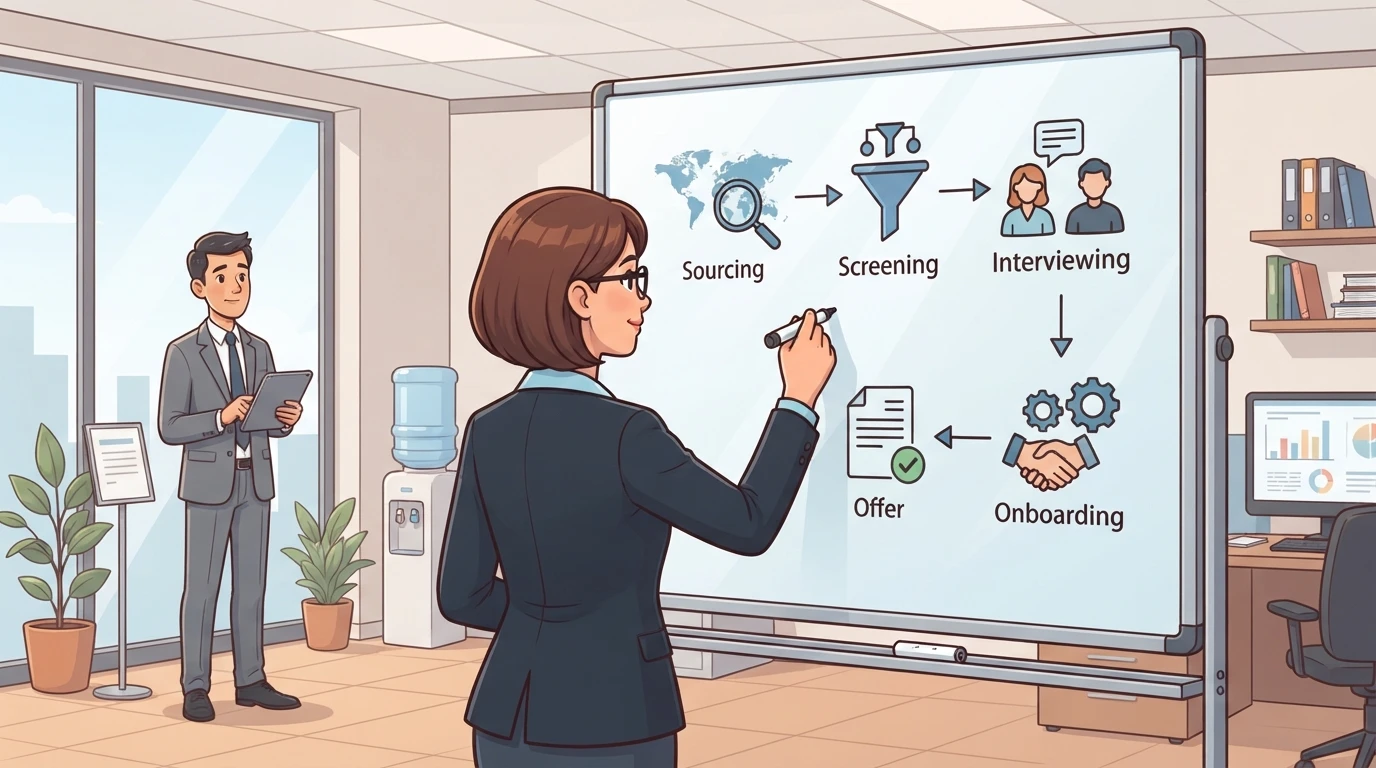
Map every stage of your funnel first. Track where candidates actually wait: approval delays, manager feedback, scheduling. Most “AI fixes” fail because the real bottleneck is a human decision, not a sourcing gap. Fix the process, then buy software to support it.
Use Global Recruitment Networks Where AI Stalls
AI tools struggle with local nuance: regional pay norms, labor law, cultural fit. That’s where a global recruiting partner with recruiters in 68+ countries closes roles faster than another dashboard ever will.
How Hiring Leaders Got Here
HR Dive’s report reflects a pattern many teams already feel. Companies bought AI sourcing tools, screening software and chatbots, yet time-to-hire barely moved. Why? Most bottlenecks sit outside the software: slow approvals, unclear job requirements, thin candidate pipelines and manual scheduling. Automation speeds up tasks, not decisions. The result is faster admin on top of the same structural delays, which is why so many hiring metrics look flat despite heavy AI investment.## How Hiring Leaders Got Here
Teams invested heavily in AI recruiting tools, yet the numbers barely moved. An HR Dive report found only a third of employers saw faster time-to-hire, while 42% saw no change at all. Recruiters now juggle more tools and doubled their call time since 2024. The bottleneck was never sourcing. It sits in approvals, scheduling and decision-making, which software alone cannot fix.
If slow hiring is draining your pipeline, The Recruiting Guy can help. Our global recruiter network fills roles faster, with compliant, tailored staffing support built in.
Frequently Asked Questions
Q1: What does the latest report say about AI and hiring speed?
HR Dive reports AI tools haven’t cut time-to-hire. Approval delays, scheduling and slow decisions still dominate.
Q2: Should employers stop using AI in recruiting?
No. Use it for sourcing and screening, but fix process bottlenecks first.
Q3: What actually speeds up hiring?
Clear ownership, faster feedback and fewer approval layers.
Conclusion
AI has sped up screening, but not hiring. Delays now sit in human stages: approvals, interviews and decisions. Fix those bottlenecks, set realistic time-to-hire targets, and treat technology as support rather than a cure.

Other Articles

Internal Recruiter Teams vs Outsourcing: Which Scales Hiring Better?

No Comment! Be the first one.